

Wisdom teeth are the last molars, right at the back, and they usually arrive between 17 and 25, when most people have long forgotten what teething feels like. For some people they come through without fuss. For many, they arrive crooked, half-buried, or with no room at all, and the result is the deep, dull jaw pain that brought you to this page.
Why wisdom teeth hurt
They are trying to come through. A tooth pushing through the gum causes pressure and soreness for a few days at a time, on and off, sometimes for months. This is normal teething, just late.
They are stuck (impacted). When the jaw has no room, the tooth comes in at an angle or stays buried under gum or bone. It presses on the tooth in front of it and on the nerve nearby, causing a constant ache that can spread to the ear, the temple or the throat.
The gum flap is infected (pericoronitis). A half-erupted tooth has a flap of gum lying over it. Food gets trapped under the flap, bacteria grow, and the gum becomes swollen and very tender. This is the most common cause of severe wisdom tooth pain, and it comes with a bad taste, difficulty opening the mouth wide, and sometimes swelling of the cheek. It flares up, settles, and flares again.
The tooth has decayed. Wisdom teeth are hard to brush, so they decay more than other teeth, and the decay is often found only when it reaches the nerve and starts throbbing, especially at night (see our guide to tooth pain at night).
It is damaging the tooth next to it. An angled wisdom tooth traps food against the back of the second molar, which then decays. The pain feels like it is coming from the wisdom tooth, but the damage is to the healthy tooth in front.
What to do about the pain tonight
None of these fix a tooth that needs treatment, but they get you to your appointment.
- Rinse with warm salt water every few hours, half a teaspoon in a glass, and let it sit at the back of the mouth for 30 seconds. This is the single most effective home step for an infected gum flap.
- Clean under the gum flap gently with a soft brush, angled from behind. Trapped food is what keeps the infection going.
- Take a regular painkiller exactly as the pack says, if you have no allergy or condition that rules it out. Ibuprofen tends to work better than paracetamol for this kind of pain because it also reduces the swelling.
- Cold compress on the outside of the cheek, 15 minutes on and off.
- Eat soft foods and chew on the other side.
- Do not put aspirin on the gum, use a heat pad, or poke the area with anything sharp.
Go to a hospital emergency department without waiting if you have swelling spreading down the neck, fever with facial swelling, or difficulty swallowing or breathing. These are rare but serious.
Remove or keep? How the decision is made
A wisdom tooth is worth keeping when it has come through fully, sits upright, meets a tooth on the opposite jaw, and you can reach it to brush. Such a tooth is just another molar.
Removal is advised when the tooth is:
- Impacted, with no realistic path to come through properly
- Repeatedly infected (two or more episodes of pericoronitis)
- Decayed beyond a simple filling, which is common because it cannot be cleaned
- Causing decay or gum problems on the tooth in front of it
- Associated with a cyst or bone loss on the X-ray
- In the way of orthodontic treatment
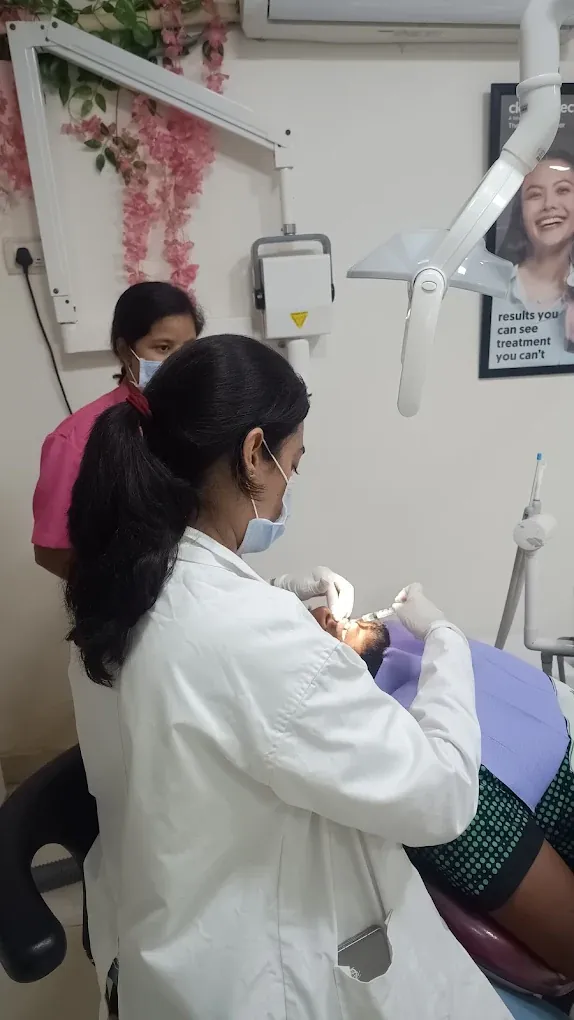
The decision takes one X-ray and a five-minute examination. At The Tooth Corner, that is done at the consultation and the reasoning is explained to you, including the honest answer if the tooth can stay.
What removal is actually like
Two kinds of removal exist, and which one you need depends on how the tooth sits.
Simple removal is for a tooth that has come through. The area is numbed, the tooth is loosened and lifted out, and it is usually over in 10 to 20 minutes. Upper wisdom teeth are often this kind.
Surgical removal is for an impacted tooth. Under local anaesthesia, a small opening is made in the gum, a little bone may be removed, and the tooth is often divided into sections so it can be taken out with minimal force. It takes 30 to 45 minutes and a couple of dissolving stitches close the gum. At our clinic these are done in-house by Dr. Somangshu Chakraborty, an oral and maxillofacial surgeon (MDS, FMFT), which means no referral across the city and no waiting weeks for a slot.
In both cases you feel pressure and pushing, not pain. If you are very anxious, say so; there are ways to make the appointment easier.
Recovery, day by day
- Day 1: Bite on the gauze for 30 to 45 minutes. Rest. Cold compress. Soft, cool food once the numbness wears off. Take the painkiller before the anaesthetic fully wears off, not after.
- Days 2 to 3: Swelling and stiffness peak. Start warm salt water rinses from day two, gently. Soft warm food. Most people return to work or college in this window.
- Days 4 to 7: Swelling drops steadily. Pain should be reducing every day. If it gets worse after day three, call us: that is the sign of a dry socket, which is easily treated.
- Weeks 2 to 3: Gum closes over. Stitches dissolve or are removed at a short review.
For the first three days: no smoking, no straws, no forceful spitting or rinsing, no alcohol, no heavy exercise. All of these can dislodge the clot and cause a dry socket.
What it costs
The cost depends on whether the removal is simple or surgical, which the X-ray decides. You get an exact figure at the consultation, in writing, before anything is booked. Removal is a one-time cost; a repeatedly infected wisdom tooth costs more over time in painkillers, antibiotics and lost days than removing it once.
If your jaw has been aching at the back and you are not sure whether it is a wisdom tooth or something else, message us on WhatsApp. An X-ray and a clear answer take fifteen minutes. We are in Green Glen Layout, Bellandur, open daily from 10 AM to 9 PM.