
If you are reading this in the middle of the night with one hand on your cheek, here is the short version: raise your head, rinse with warm salt water, take a normal painkiller if you safely can, and message a dentist first thing in the morning. The rest of this guide explains why the pain gets worse at night, what it is telling you, and what to avoid so you do not make it worse.
Why tooth pain feels worse at night
It is not your imagination. Three things happen after dark that turn a dull ache into a throbbing one.
Lying down raises the pressure inside the tooth. When you are upright, gravity keeps some blood away from your head. When you lie flat, more blood flows to the head and face, which increases the pressure inside a tooth whose pulp (the soft tissue with the nerve inside) is already inflamed. Inflamed tissue in a hard, closed space has nowhere to swell, so the extra pressure goes straight to the nerve.
There is nothing to distract you. During the day, work, traffic and conversation push the pain to the background. At night the pain is the only signal your brain is processing, so it feels louder.
Your late evening habits add fuel. A sweet snack or a cold drink after dinner, a night of grinding your teeth in your sleep, or a blocked sinus from a cold can each set off a tooth that was quiet all day.
What the pain is telling you
The type of pain is a surprisingly good clue to what is going on inside the tooth.
- Sharp, quick pain with cold or sweet things that fades in seconds: usually early decay, a worn filling, or exposed root surface. Uncomfortable, but not an emergency.
- Pain that lingers for minutes after hot or cold: the pulp is inflamed and may not recover on its own. This is the stage where a filling might still save you from a root canal, so do not wait.
- Constant throbbing that wakes you up: the pulp is very likely infected. This is the classic “root canal tooth”. The good news is that a root canal done by a specialist under magnification is close to painless and saves the tooth.
- Pain when you bite down: a cracked tooth or an infection forming at the tip of the root.
- Swelling of the gum or cheek, a bad taste, or a pimple on the gum: an abscess, which is a pocket of pus. This needs a dentist within a day, not a week.
- Pain in several upper back teeth at once, worse when you bend forward: often the sinus, not the teeth, especially if you have a cold.
What to do tonight
None of these fix the cause. They buy you a few hours of sleep until a dentist can look at the tooth.
- Sleep with your head raised. Two pillows or a folded blanket under the mattress. This alone reduces the pressure inside the tooth and is the single most useful thing on this list.
- Rinse with warm salt water. Half a teaspoon of salt in a glass of warm water, swish for 30 seconds, spit. It calms the gum and clears food from around the tooth. Repeat as often as you like.
- Floss gently around the painful tooth. A trapped piece of food pressing on the gum can cause pain that feels exactly like a tooth infection. If flossing brings instant relief, that was probably the cause.
- Take a normal painkiller if you safely can. Paracetamol or ibuprofen, exactly as the pack says, and only if you have no allergy, stomach problem, kidney issue or pregnancy that rules them out. Many people find ibuprofen works better for dental pain because it also reduces inflammation.
- Cold compress on the outside of the cheek. Ice wrapped in a cloth, 15 minutes on, 15 minutes off. It numbs the area and reduces any swelling.
- Keep the tooth out of trouble. Chew on the other side, skip anything very hot, very cold or sweet, and brush gently with a soft brush.
- Clove oil, sparingly. A drop on a small piece of cotton placed on the tooth (not the gum) can numb it for a while. It stings if it touches soft tissue, so use very little.
What not to do
- Do not put an aspirin or any tablet on the gum. It burns the tissue and does nothing for the tooth.
- Do not use a heat pad or hot water bottle on the face. Heat draws infection outward and increases swelling.
- Do not go above the dose on the painkiller pack. More does not equal faster relief, and the risk to your liver or stomach is real.
- Do not press or pop a swelling. You will push the infection deeper.
- Do not assume the problem is solved if the pain stops. A tooth that throbbed for days and then went silent has often lost its nerve. The infection is still there and can flare into a facial swelling weeks later.
- Do not start leftover antibiotics. They rarely help tooth pain and they make future infections harder to treat.
When it is an emergency
Go to a hospital emergency department immediately, without waiting for morning, if you notice any of these:
- Swelling that is spreading towards your eye, under your jaw or down your neck
- Fever together with facial swelling
- Difficulty opening your mouth, swallowing or breathing
- Pain after an injury with a tooth knocked loose or out, or heavy bleeding that does not stop
For severe pain without these signs, message us on WhatsApp. We keep slots open every day for urgent cases and the clinic is open until 9 PM, so most night-time toothaches are seen the next morning or the same evening.
What happens at the clinic the next day
Most people fear the appointment more than the toothache. Here is what actually happens.
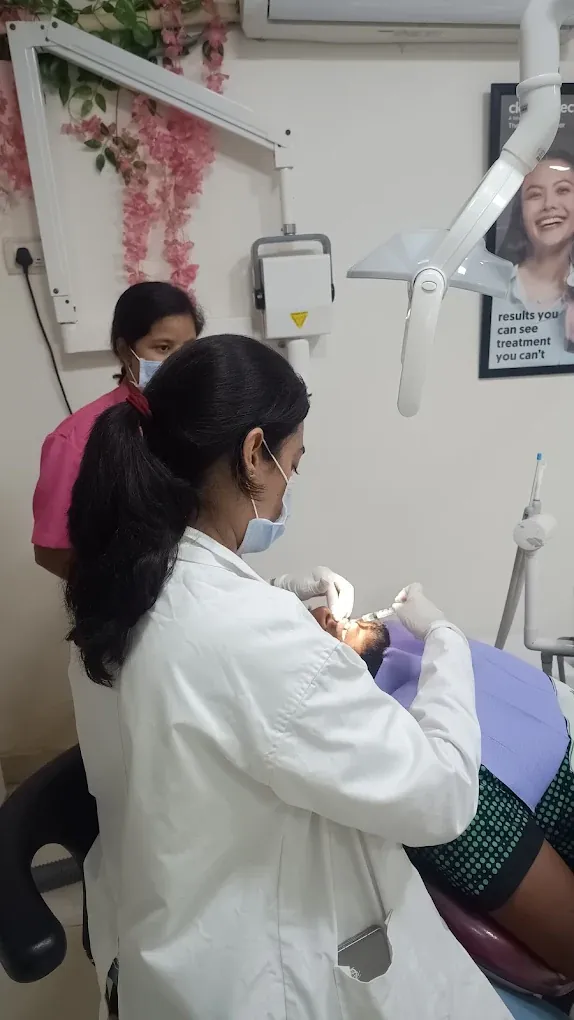
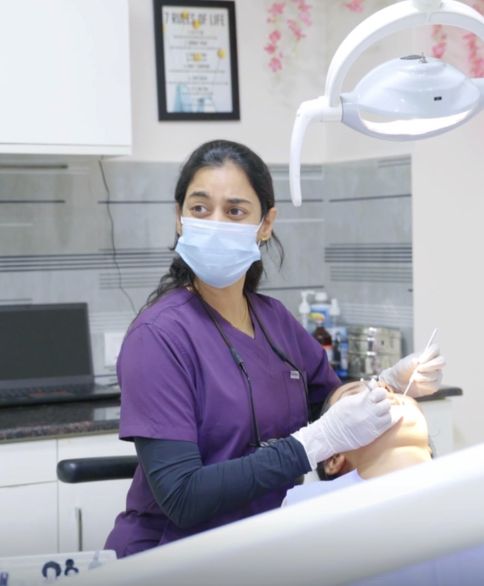
Dr. Shabnam examines the tooth, taps it, tests it with cold, and takes a small digital X-ray. Within a few minutes you know which of the situations above you are in. Then the plan is explained in plain words, with the cost in writing before anything begins.
- A small cavity gets a filling, usually done in the same visit.
- An inflamed or infected pulp gets a microscopic root canal treatment. The tooth is numbed properly first, so the treatment itself is not painful, and the throbbing is gone by the time the anaesthetic wears off. See our root canal cost guide and crown cost guide for realistic price ranges.
- An abscess is drained and the source tooth is treated.
- A cracked tooth gets a crown to hold it together, or a root canal and crown if the crack has reached the nerve.
How to stop it happening again
Night-time tooth pain almost always has a history: a twinge with cold drinks last month, a filling that felt rough, a bit of gum bleeding. Catching those early is the whole point of a six-monthly checkup, which takes 30 minutes and costs a fraction of any treatment. If you grind your teeth in your sleep, a simple night guard protects the teeth from cracking. And brush before bed, every night, because sugar left on the teeth overnight is how most cavities begin.
If a tooth is keeping you awake tonight, do the steps above, get some rest, and let us look at it tomorrow. We are in Green Glen Layout, Bellandur, right below Ratnadeep Super Market, open every day from 10 AM to 9 PM.