
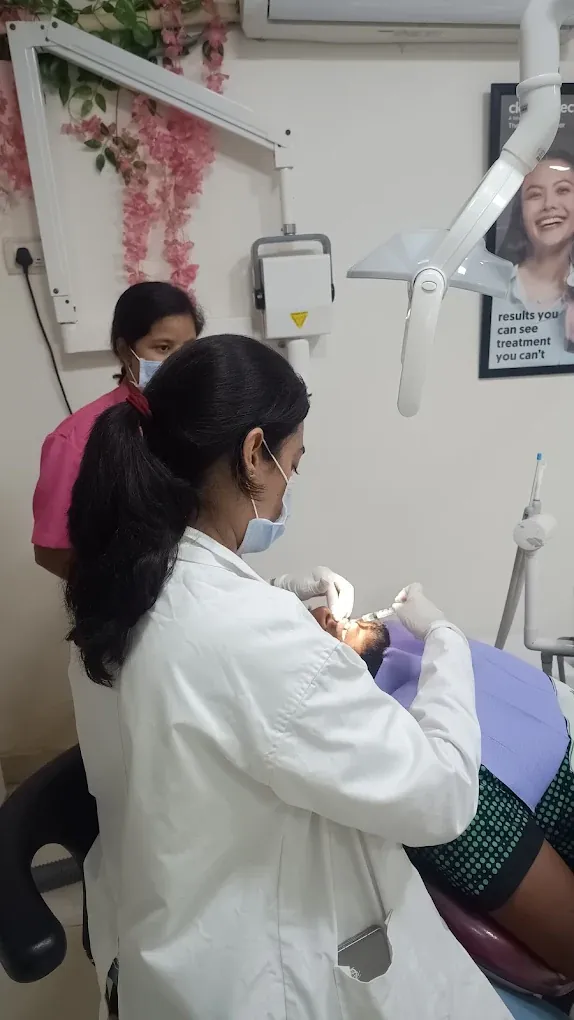

You have been told you need a root canal, or you suspect you do, and the first thing you did was search for what it involves. Good instinct. Here is the whole process, from the first X-ray to the final crown, with no drama and no jargon.
When a tooth needs a root canal
Inside every tooth is a soft core called the pulp, which holds the nerve and blood supply. When decay, a crack or an old injury lets bacteria reach the pulp, it gets inflamed and then infected. Once that happens the pulp cannot heal on its own. A root canal removes the infected pulp, cleans and seals the space inside the roots, and lets you keep the tooth.
The signs that a tooth has reached this stage:
- Pain that lingers for minutes after something hot or cold, rather than fading in seconds
- Throbbing pain that comes on its own, especially at night (read our guide to tooth pain at night)
- Pain when you bite or press on the tooth
- A swelling on the gum near the tooth, or a small pimple that comes and goes
- A tooth that has turned grey or darker than its neighbours
- Sometimes nothing at all: a dead pulp is found on a routine X-ray
Three myths that need to go first
“Root canals are painful.” They were, 30 years ago. Today the tooth is numbed properly before anything begins, and the anaesthetic is checked before we proceed. The treatment relieves pain; it does not cause it. What people remember as a painful root canal is usually the infected tooth they walked in with.
“It is easier to just remove the tooth.” Removing it is quicker on the day. Then you have a gap, the neighbouring teeth drift into it, chewing shifts to the other side, and you eventually need a bridge or an implant, which costs more than the root canal would have. Saving a natural tooth is almost always better and cheaper over a lifetime.
“Root canal teeth cause illness elsewhere in the body.” This comes from research from the 1920s that was disproved decades ago. A properly treated tooth is a sealed, clean tooth. An untreated infected tooth is the one that affects your health.
What happens, sitting by sitting
Before treatment: diagnosis (20 minutes). Dr. Shabnam examines the tooth, taps it, tests it with cold, and takes a small digital X-ray. This confirms whether the pulp is involved and shows the shape and number of the roots. You get the diagnosis, the plan, the number of sittings, and the full cost including crown options, in writing, before anything begins.
Sitting one: cleaning the canals (60 to 90 minutes).
- The tooth and the gum around it are numbed with local anaesthetic. We wait, and we check, before starting.
- A thin rubber sheet called a rubber dam is placed around the tooth. It keeps the tooth dry and clean and keeps everything else out of your mouth. Patients often find this the most comfortable part, because nothing touches the tongue.
- A small opening is made in the top of the tooth to reach the pulp.
- The infected pulp is removed and each canal is measured, cleaned and shaped with fine instruments. At The Tooth Corner this is done under a dental microscope, which is how extra or hidden canals get found. A missed canal is the most common reason root canals fail elsewhere.
- The canals are washed with disinfecting solutions to kill remaining bacteria.
- If the infection was large, a medicated dressing is placed inside the tooth and a temporary filling seals it until the next sitting. If the tooth is straightforward, we go directly to the next step in the same visit.
Sitting two, if needed: sealing (45 to 60 minutes). The temporary filling is removed, the canals are checked, dried, and filled with a rubber-like material called gutta-percha that seals them permanently. The opening is closed with a strong filling. If a lot of tooth structure was lost, a post may be placed inside a canal to support the filling.
The crown (two short visits, about two weeks later). The tooth is shaped, an impression or scan is taken, and a temporary crown protects it while the lab makes the final one. At the second visit the crown is checked for fit and bite and fixed permanently. Our crown cost guide explains the material options.
What it feels like afterwards
Numbness lasts two to three hours. Once it wears off, expect the tooth to feel tender to bite on for two to three days, sometimes up to a week if the infection was severe. A regular painkiller, taken as the pack says, is usually all that is needed. The throbbing that brought you in is gone from the first sitting, because the inflamed nerve is gone.
Call us if pain gets worse after day three instead of better, if there is swelling, or if the temporary filling comes out. These are uncommon and easily handled, but they should not wait.
Aftercare that actually matters
- Do not chew on the treated tooth until the permanent crown is on. A temporary filling and an uncrowned tooth can crack under a hard bite.
- Avoid sticky foods that can pull the temporary filling out.
- Brush and floss normally, gently around the tooth.
- Keep the crown appointment. The single biggest reason root canal teeth are lost is patients feeling fine and skipping the crown, then cracking the tooth months later.
What it costs
Prices depend on which tooth it is and how complex the canals are. Our root canal cost guide gives realistic Bangalore ranges for front teeth, molars and re-treatments, plus the crown. Whatever the number, at our clinic it is agreed in writing before the first sitting, and it covers the whole treatment, not per sitting.
The short version
A root canal is a long filling done in one or two sittings under proper numbing, followed by a crown. It saves a tooth that would otherwise be lost, and it ends the pain rather than causing it. If a tooth has been warning you, book a consultation; the earlier it is treated, the simpler and cheaper it is. We are in Green Glen Layout, Bellandur, open every day from 10 AM to 9 PM.