
Microscopic Root Canal Treatment
Root canal treatment by a specialist endodontist, performed under high magnification, so the canals that cause most failures elsewhere are actually found and cleaned.

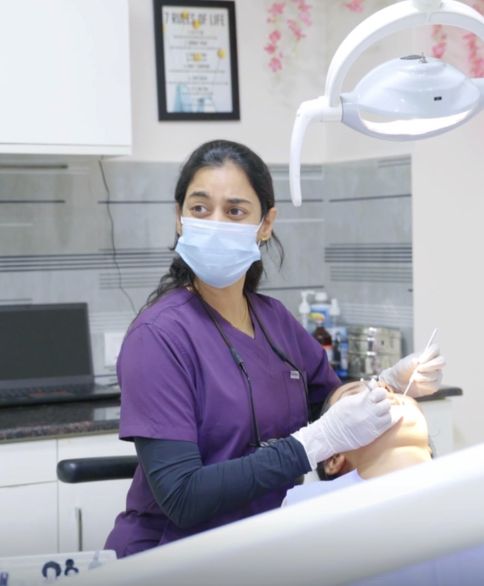
Root canals are what I trained for. An MDS in Conservative Dentistry and Endodontics is three extra years spent on this one procedure, and I have now completed over 2,919 of them. The difference a specialist makes is not comfort on the day, which any good dentist can manage. It is whether the tooth is still there in fifteen years.
Dr. Shabnam, MDS | Endodontist & Smile Designer
A root canal saves a tooth whose inner pulp, the soft tissue holding the nerve and blood supply, has become infected or inflamed. Once that happens the pulp cannot heal on its own. The treatment removes it, cleans and seals the space inside the roots, and lets you keep a tooth that would otherwise have to come out.
At The Tooth Corner this is the clinic’s flagship treatment. Dr. Shabnam holds an MDS in Conservative Dentistry and Endodontics, has completed over 2,919 root canals, and performs every case herself under a dental operating microscope.
Signs your tooth may need one
- Pain that lingers for minutes after something hot or cold, rather than fading in seconds
- Throbbing that arrives on its own, often worst at night when you lie down
- Pain when you bite or press on the tooth
- A swelling on the gum near the tooth, or a small pimple that comes and goes
- A tooth that has turned grey or darker than its neighbours
- Sometimes nothing at all, and a dead pulp is found on a routine X-ray
If a tooth is keeping you awake right now, our guide on tooth pain at night covers what genuinely helps until morning and what to avoid.
Why the microscope matters more than it sounds
Most root canals that fail do not fail because of the dentist’s care on the day. They fail because a canal was missed.
Molars commonly have three canals, often four, and the fourth is narrow, hidden and easy to walk past with the naked eye. Leave it untreated and the infection stays inside the tooth, sealed in. The tooth may feel fine for a year or two, then flare up, and by then the options are re-treatment or extraction.
A dental operating microscope magnifies the inside of the tooth many times over. It is how extra canals, curved roots, hairline cracks and leftover infection actually get seen. It also means less healthy tooth structure has to be removed to find them, which leaves the tooth stronger afterwards.
What happens, in short
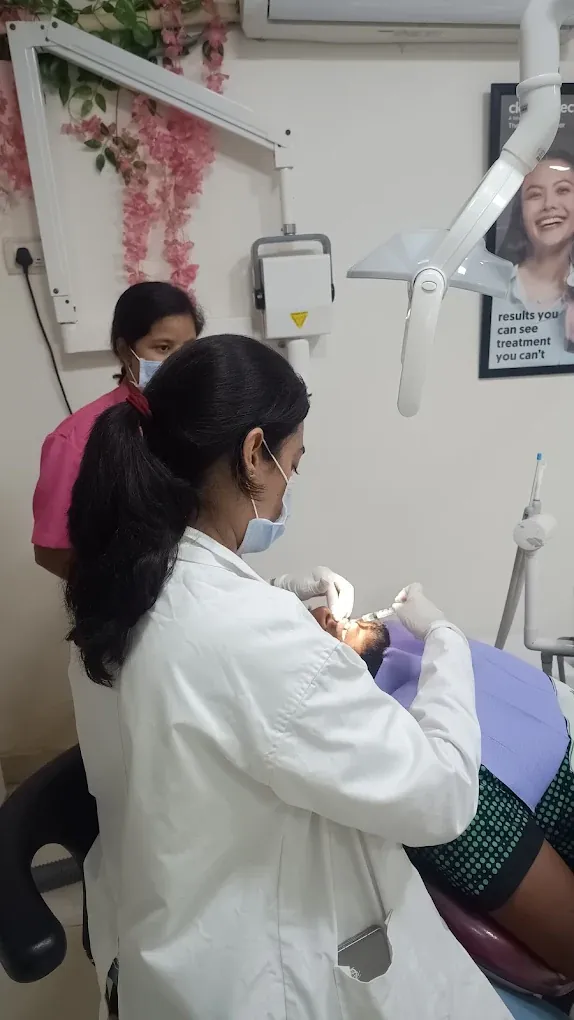
The tooth is numbed, a rubber dam isolates it so nothing touches your tongue, a small opening is made, and each canal is cleaned, shaped and disinfected before being sealed. Most patients are surprised at how ordinary it feels.
For the full step by step version, including what the days afterwards feel like, read our guide on what actually happens in a root canal.
Re-treatment: when a root canal has already failed
A good number of the cases we see were treated somewhere else and did not settle. The tooth aches on biting, or a swelling keeps returning, or an X-ray shows infection still sitting at the root tip.
Re-treatment means reopening the tooth, removing the old filling material, locating what was missed and sealing the tooth properly. It is harder than a first-time root canal and it is precisely the work specialist training and magnification exist for. If you have X-rays or notes from the earlier treatment, bring them, since they often show exactly where the problem is.
When we will tell you not to do it
Not every painful tooth is worth saving, and you should be suspicious of a clinic that never says so. A root canal is the wrong call when the tooth is cracked vertically down the root, when too little tooth structure remains above the gum to hold a crown, or when the supporting bone has already been lost to advanced gum disease.
In those cases the honest answer is removal, followed by a bridge or a dental implant. You will hear that from us directly rather than after you have paid for treatment that was never going to hold.
What it costs
| Treatment | Typical Bangalore range |
|---|---|
| Front tooth root canal | ₹4,000 to ₹7,000 |
| Molar root canal | ₹6,000 to ₹12,000 |
| Re-treatment of a failed root canal | ₹8,000 to ₹15,000 |
| Crown afterwards | ₹3,500 to ₹15,000 |
These are indicative ranges to help you plan, not a price list. Your exact figure depends on which tooth it is and how complex the canals are, and it is confirmed in writing before treatment begins. The quote covers the complete treatment rather than each sitting, so extra visits do not mean extra charges. Our root canal cost guide explains what moves the number, and the crown cost guide covers the cap that follows.
Be wary of teaser pricing. A root canal advertised at ₹1,999 usually covers only the first sitting, with the rest billed as you go.
Finishing the job: the crown
A root canal treated back tooth is hollow and brittle, and it will crack under chewing pressure without a crown over it. A cracked root canal tooth is usually beyond saving, so skipping the crown risks losing the tooth you just paid to keep.
This is the most common reason treated teeth are lost, and it is entirely avoidable. See crowns and bridges for the materials and how the fitting works.
Booking in Bellandur
The clinic is in Green Glen Layout, Bellandur, below Ratnadeep Super Market, open every day from 10 AM to 9 PM, so treatment fits around office hours on the Outer Ring Road. Patients come to us from Bellandur, HSR Layout, Sarjapur Road, Haralur, Kasavanahalli and Marathahalli.
We keep room in the schedule every day for urgent cases. If you have severe pain or swelling, message us on WhatsApp and we will fit you in rather than book you for next week.
Your visit, step by step
- 1
Consultation & Diagnosis
Dr. Shabnam examines the tooth, tests it with cold, taps it and takes digital X-rays to confirm whether a root canal is actually needed. Sometimes it is not, and you will be told that. You get the findings, the plan and the full cost in writing before anything begins.
- 2
Treatment Planning
The root anatomy is mapped so the procedure can be planned rather than improvised. The number of visits, the steps involved and whether the tooth will need a crown afterwards are all agreed upfront.
- 3
Microscopic Root Canal Procedure
Under local anaesthesia and a rubber dam, the infected pulp is removed and every canal is cleaned, shaped and sealed under high magnification. The microscope is how extra and hidden canals get found, which is the single most common reason root canals fail elsewhere.
- 4
Restoration & Aftercare
The tooth is sealed and, for back teeth, protected with a crown to stop it cracking under chewing force. You receive clear aftercare instructions and a follow-up review to confirm healing is on track.
Frequently asked questions
Is a root canal painful?
The treatment is not. The tooth is fully numbed first and we check the anaesthesia before starting, so most patients describe it as a long filling. What actually hurts is the infected tooth you walk in with, and that pain is gone once the inflamed nerve is removed. Mild tenderness to bite on for two or three days afterwards is normal and settles with a regular painkiller.
Why go to a specialist instead of a general dentist?
A BDS is a general dentist. An MDS Endodontist has three additional years of training in this one procedure. For a straightforward front tooth the difference is small. For a molar with curved or extra canals, a tooth that has failed before, or a case where the anatomy is unusual, specialist training and a microscope change the odds of the tooth surviving long term.
How many visits will I need?
Most root canals here finish in one or two visits. A front tooth with a single canal is often done in one. A molar with three or four canals, or a tooth with a large infection, usually takes two visits about a week apart so medication can work inside the tooth. The crown follows after that.
Can a failed root canal be fixed?
Usually yes. Re-treatment means reopening the tooth, removing the old filling material, finding what was missed, most often an untreated canal, and sealing it properly. It is more demanding than a first-time root canal and is exactly the kind of case a specialist and a microscope are for. Bring your old X-rays if you have them.
How much does a root canal cost in Bangalore?
A front tooth typically runs ₹4,000 to ₹7,000 and a molar ₹6,000 to ₹12,000, with re-treatment of a failed root canal at ₹8,000 to ₹15,000. The crown afterwards is separate. Our root canal cost guide explains what moves the number, and your exact figure is agreed in writing before treatment starts, for the whole treatment rather than per sitting.
Do I definitely need a crown afterwards?
For back teeth, almost always. A root canal treated tooth has no blood supply and turns brittle, and molars take heavy chewing force, so without a crown they crack. A cracked root canal tooth usually cannot be saved, which wastes the whole treatment. For front teeth, which take far less force, a filling is sometimes enough, and Dr. Shabnam will tell you honestly which applies to you.
Guides patients read about this
You may also be looking for



Ready to discuss microscopic root canal?
Take the first step towards a healthier smile. Book your appointment with Dr. Shabnam today and we’ll handle the rest.
Open daily, 10:00 AM to 9:00 PM · Bellandur, Bengaluru