Child Dentistry (Pediatric Care)
Check-ups, fillings and milk tooth treatment for children, done at your child's pace, with a written plan and cost for you before anything starts.
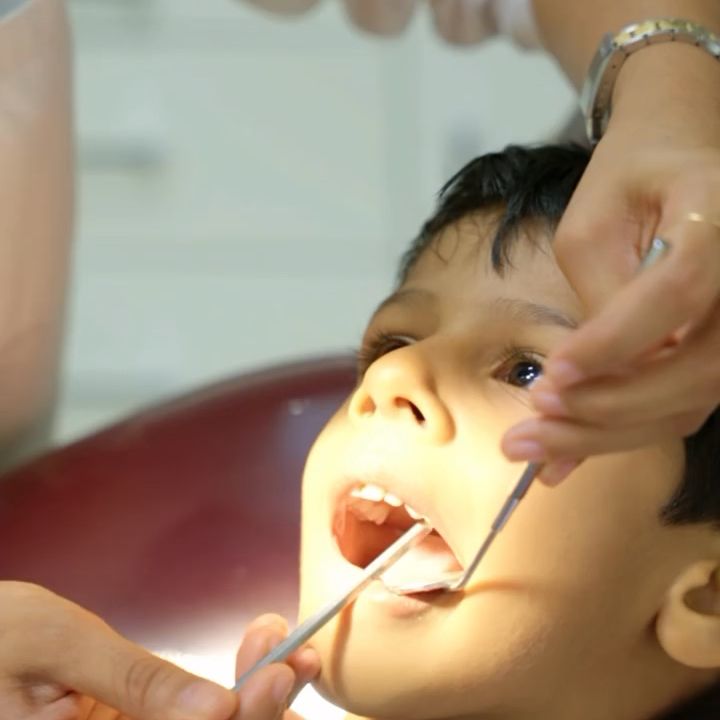
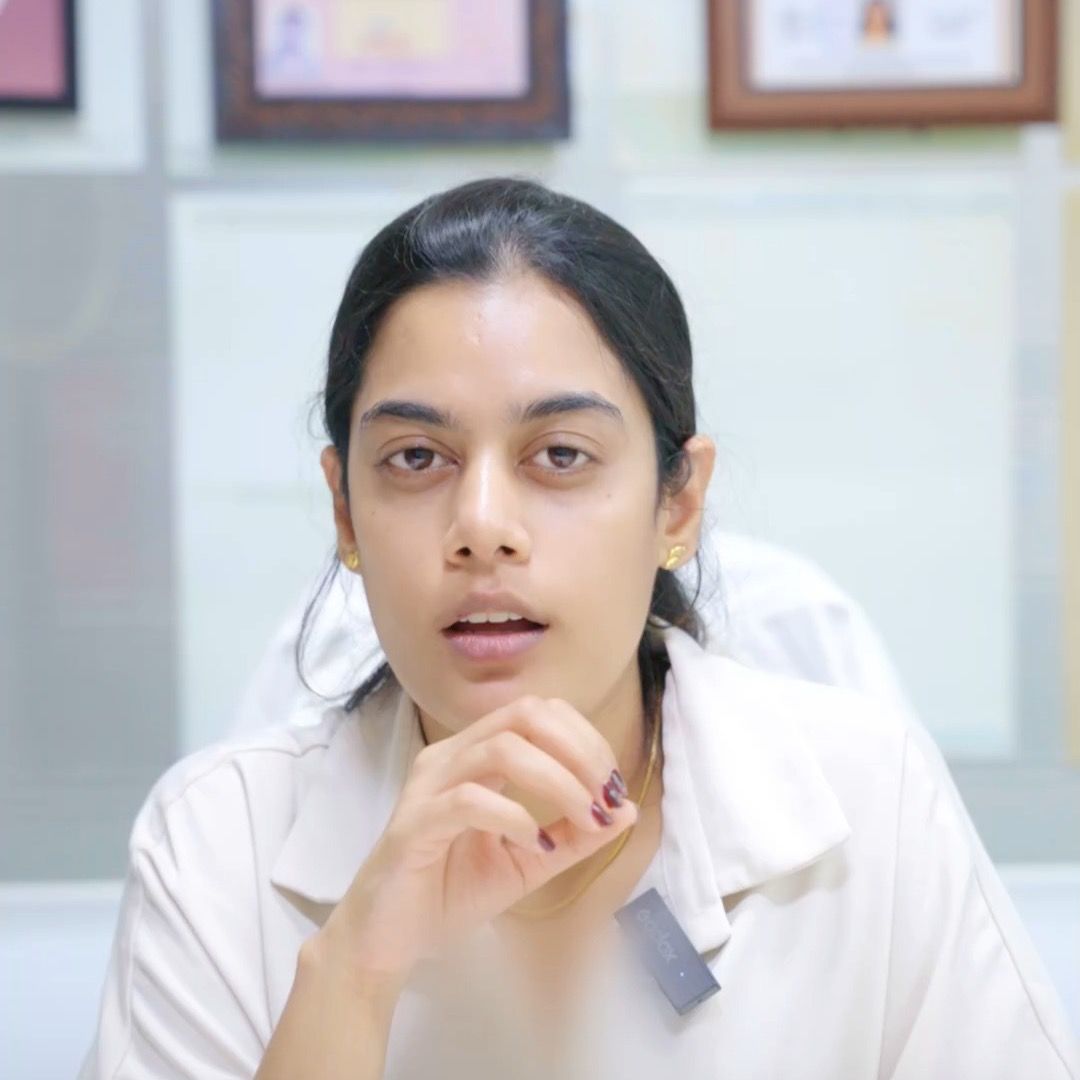
Parents often tell me a decayed milk tooth can be left alone because it will fall out anyway. The front ones do go early, but the back milk teeth stay until 10 to 12, and a cavity in one of them hurts exactly like it would in an adult. Caught early, it is a quick filling. Left for months, it turns into a long visit, and the child starts fearing the dentist.
Dr. Shabnam, MDS | Endodontist & Smile Designer
Children’s teeth get the same problems as adult teeth: cavities, infections, broken teeth and crooked bites. The difference is in the handling: shorter appointments, simpler explanations, and treatment planned around a jaw that is still growing. This page covers what we treat in children and how. For the right age for the first visit and how to prepare your child for it, read our guide to your child’s first dental visit.
What we treat in children
- Cavities in milk teeth: tooth-coloured fillings, done in one short sitting per tooth where possible.
- Infected milk teeth: pulpotomy or pulpectomy, the children’s version of a root canal, usually followed by a cap so the tooth lasts until it falls out naturally.
- Teeth that cannot be saved: a gentle extraction. If a back milk tooth is lost early, the gap may need a space maintainer so the adult tooth has room to come in straight.
- Prevention: fluoride varnish painted on the teeth, and sealants on the chewing surfaces of the first adult molars, which come in around age 6 and are a common place for cavities to start.
- Injuries: knocked-out, loosened or chipped teeth from falls, cycling and school sports.
- Bite and growth: an early check by our orthodontist for crowding, crossbites and habits like thumb sucking.
Why milk teeth are worth treating
Milk teeth do three jobs. They let your child chew properly, they help with clear speech, and they hold the space for the adult teeth underneath. The front ones fall out around age 6 or 7, but the back ones stay until 10 to 12.
When a back milk tooth is lost early to decay, the teeth next to it drift into the gap. The adult tooth then has nowhere to come in, and it erupts crooked or stays stuck. Treating a back milk tooth early lowers the chance of crooked adult teeth later.
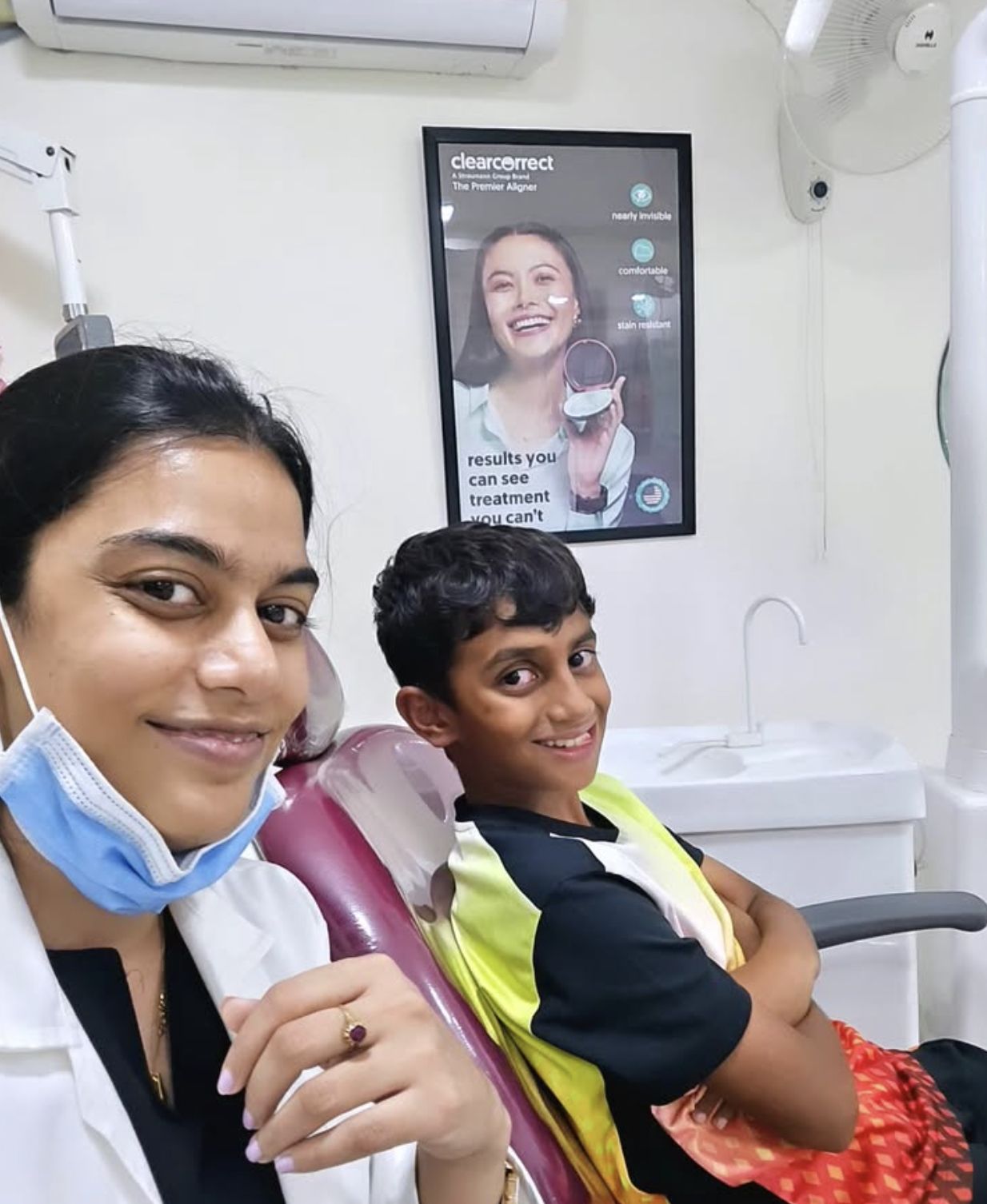
Dr. Shabnam with one of her young patients at the clinic.
The habits behind most childhood cavities
It is rarely one big sweet that causes cavities. It is small amounts of sugar through the day, and feeds at night.
- Milk or juice at bedtime: a bottle or feed at night leaves sugar sitting on the teeth for hours while saliva flow drops. It is the most common cause of decay in the front teeth of toddlers.
- All-day sipping: juice, flavoured milk or sweet tea through the day keeps the teeth under constant attack. With meals is far better than in between.
- Sticky snacks: biscuits, chips and toffees that cling to the grooves of the back teeth do more damage than a piece of chocolate eaten and gone.
- Brushing alone too early: most children cannot brush their back teeth properly until about 7 or 8. Until then, a parent should brush, or at least finish the job, every night.
Knocked-out or broken tooth: the first hour
Falls are common at this age, and what you do in the first hour matters more than anything we do later.
- Milk tooth knocked out: do not put it back. Press a clean cloth on the gum to stop the bleeding and bring your child in so we can check the area and the adult tooth underneath.
- Adult tooth knocked out: hold it by the white crown, not the root. If it is dirty, rinse it for a few seconds only, do not scrub it. Push it gently back into the socket and have your child bite on a cloth, or keep the tooth in a cup of milk. Come in straight away.
- Chipped tooth: keep the broken piece in milk or water. It can sometimes be bonded back on.
Call or WhatsApp us on the way and we will see your child as quickly as we can.
The age 7 bite check
By age 7 the first adult molars and front teeth are in, and the way the jaws are growing is clear. That is the right time for a quick orthodontic check, even if the teeth look fine.
Most children will not need anything yet. But a crossbite, a narrow upper jaw, or a thumb-sucking habit that has carried on past age 4 or 5 are far easier to correct while the child is still growing than after. These checks are done by Dr. Swaroop D, our consultant orthodontist in Bellandur. If braces are needed later, the braces page explains the options for teenagers.
When a pediatric specialist is the better choice
Check-ups, cleanings, fillings and milk tooth treatment are all routine work at the clinic. But some cases are better handled by a pediatric dental specialist, and you should hear that from us directly.
That usually means a very young child with decay in many teeth at once, a child who cannot manage treatment in the chair even after a few short visits, or a child with medical needs that make treatment under sedation or general anaesthesia the safer option. In those cases we will explain why and suggest where to go.
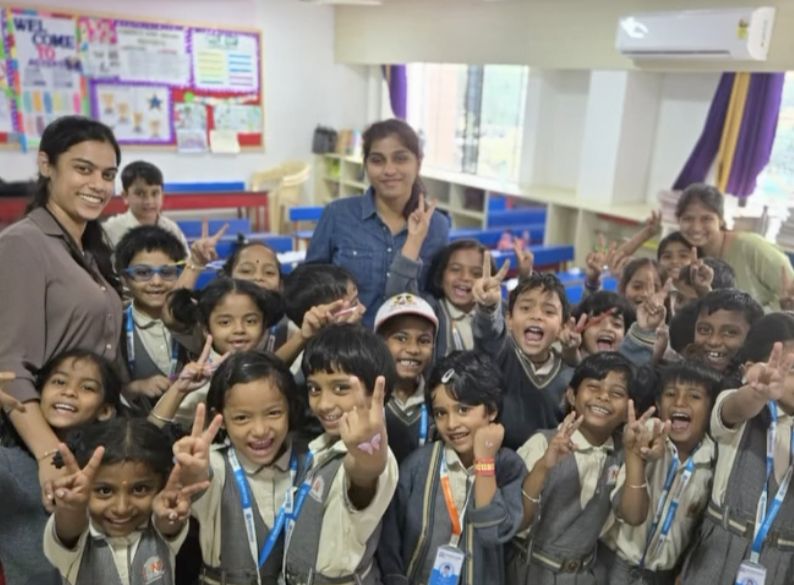
Dr. Shabnam at one of the school dental check-up camps run by the clinic.
What it costs
Most visits for children are a check-up, a cleaning and fluoride. When treatment is needed, the cost depends on how many teeth are involved and what each one needs. You get the full plan with the cost in writing before anything starts, so you can decide without being rushed in the chair.
Booking around school hours
The clinic is in Green Glen Layout, Bellandur, below Ratnadeep Super Market, open every day from 10 AM to 9 PM, Sundays included. After-school and weekend slots are available. The team speaks English, Hindi, Kannada and Telugu, and younger children are often more comfortable in their home language.
Families come to us from Bellandur, HSR Layout, Sarjapur Road, Haralur and Kasavanahalli. Message us on WhatsApp with your child’s age and what is bothering them, and we will suggest a suitable time.
Your visit, step by step
- 1
Meet, then check
The first few minutes are for your child to settle in: sit in the chair, ride it up and down, hold the mirror. Then the doctor counts and checks the teeth, gums and bite while you sit close by.
- 2
A plan you can read
You are told what was found and what actually needs doing, which is often nothing more than a cleaning and fluoride. If treatment is needed, you get the plan and the cost in writing before anything starts.
- 3
Treatment in short sittings
Fillings and other treatment are kept short. If your child gets upset, we stop, and it is fine to finish on another day. A child who leaves calm copes much better at the next visit.
- 4
Habits and follow-up
You go home with specific advice on brushing, night feeds and snacks for your child's age, and a reminder for the next check-up, usually every six months.
Frequently asked questions
Does a cavity in a milk tooth really need a filling?
Usually yes, if the tooth still has a few years left. Back milk teeth stay until about 10 to 12. A small cavity left alone grows into the nerve within months, and then it means pain, swelling or an extraction. A filling done early is quick, and it spares your child a bigger procedure later.
Is a root canal on a milk tooth safe?
Yes. In children it is called pulpectomy or pulpotomy, and it is simpler than an adult root canal. The infected nerve tissue is removed, the tooth is filled with a material that dissolves along with the root, and the tooth is usually covered with a cap. Done properly, it does not harm the adult tooth growing underneath, and it keeps the milk tooth holding its space until it falls out on its own.
My child's tooth got knocked out. What should I do?
If it is a milk tooth, do not try to put it back, as that can damage the adult tooth below. Press a clean cloth on the bleeding and come in. If it is an adult tooth, usually from age 6 onwards, pick it up by the crown, not the root, rinse it for a few seconds if it is dirty, and push it back into the socket or keep it in a cup of milk. Then come in straight away. The first hour decides whether it can be saved.
When should my child get checked for braces?
Around age 7. Most children will not need anything yet, but crossbites, jaw growth problems and habits like thumb sucking are easier to correct while the jaw is still growing. Dr. Swaroop D, our orthodontist, does these checks at the clinic.
What if my child refuses to sit in the chair?
We do not force it. Many children need one or two short visits just to get comfortable, and that is normal. If a child still cannot manage treatment after that, and the treatment cannot wait, a pediatric dental specialist who can treat under sedation is the safer route, and we will tell you so.
How much does child dentistry cost?
Most children's visits are a check-up and a cleaning. When treatment is needed, the cost depends on how many teeth are involved and what each one needs, and you get the full plan with the cost in writing before anything starts.
Guides patients read about this
You may also be looking for

Ready to discuss child dentistry?
Take the first step towards a healthier smile. Book your appointment with Dr. Shabnam today and we’ll handle the rest.
Open daily, 10:00 AM to 9:00 PM · Bellandur, Bengaluru