
Parents ask us this question more than any other: “When should I bring my child to the dentist?” The answer surprises most of them. The right time is when the first tooth appears, or by the first birthday, whichever comes first. Not at age five. Not when something hurts.
This guide covers why that early, what actually happens at a first visit, how to prepare your child at home, and the questions parents in Bellandur ask us most.
When to go: first tooth or first birthday
The Indian Dental Association and paediatric dental bodies around the world agree on the same rule: first visit by age one. Here is why it matters.
- Cavities start early. Milk teeth have thin enamel, and a bottle of milk at bedtime or frequent sweet snacks can cause decay within months of a tooth appearing. By age three, a surprising number of children in Bangalore already have a cavity.
- Habits are easier to fix early. Thumb sucking, bottle feeding beyond 12 to 18 months, and mouth breathing all change how the jaw grows. Caught at one or two, these are a conversation. Caught at six, they can mean braces later.
- The first visit sets the tone for life. A child who visits at one, when nothing hurts, learns that the dentist is a friendly place where someone counts your teeth. A child whose first visit is for a painful tooth at five learns something very different, and that fear can last into adulthood.
If your child is already three, five or eight and has never been to a dentist, do not worry about what you missed. Book the visit now. Starting late is far better than not starting.
What happens at the first visit
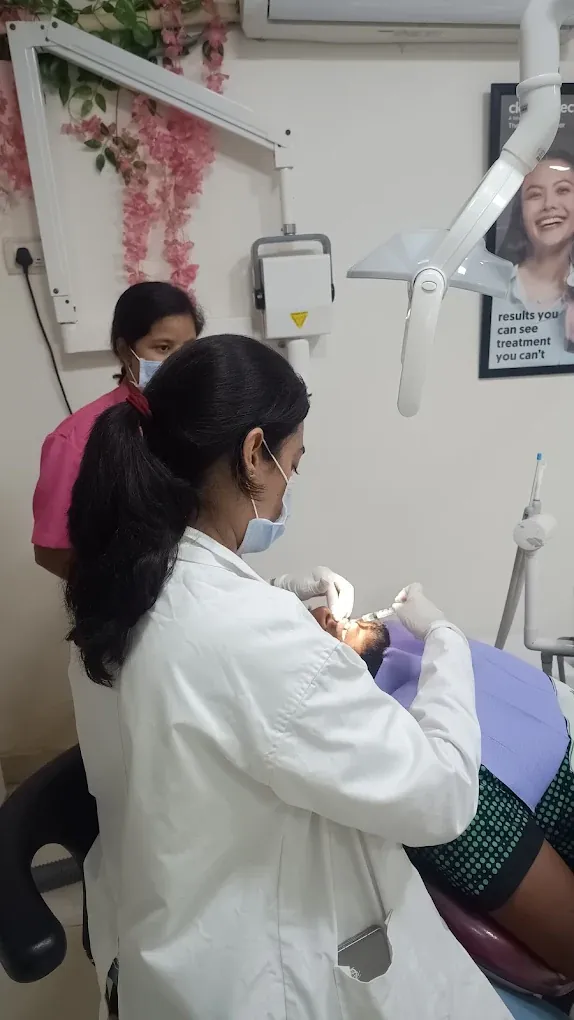
Parents often imagine a full treatment. The first visit is nothing like that. At The Tooth Corner it looks like this, and takes 20 to 30 minutes.
- Meeting the team. Your child gets a few minutes to look around, sit on your lap or on the big chair, and ride it up and down. Nobody rushes. For a nervous child, this part alone can be most of the visit, and that is fine.
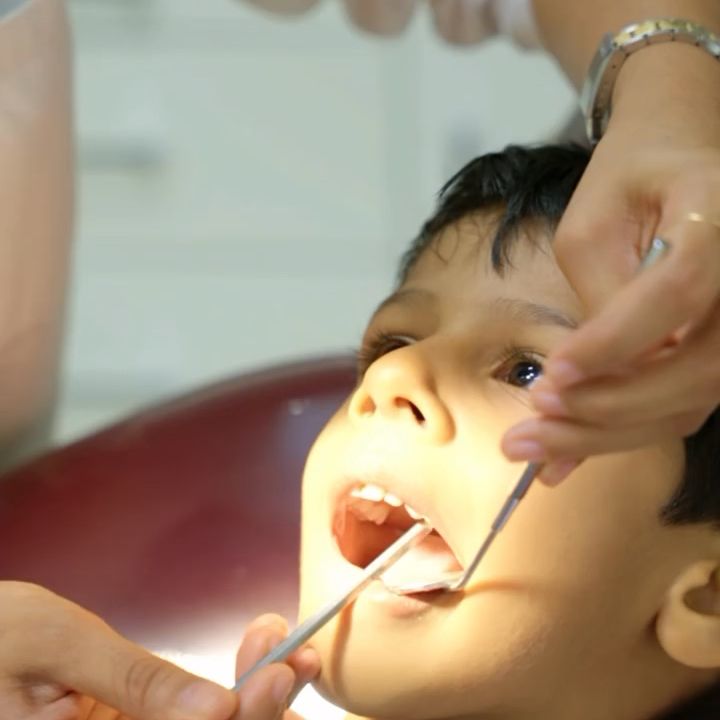
- Counting teeth. Dr. Shabnam or one of the team counts your child’s teeth out loud with a small mirror. Children usually love this. It is also a full check for early decay, gum health, how the teeth meet, and whether the tongue and lips are working normally.
- A gentle clean and fluoride, if needed. For older toddlers, a quick polish and a fluoride varnish (a thin coating painted on the teeth that strengthens the enamel) may be done. It takes a minute and does not hurt.
- Answers for you. This is the part parents find most useful: how to brush a wriggling toddler, how much toothpaste, what to do about the bedtime bottle, whether the thumb sucking is a problem yet, and when to expect the next teeth.
- The high five. Every child leaves with praise and a reason to come back. No treatment is done at the first visit unless something urgent is found, and even then it is explained to you first.
How to prepare your child at home
The visit itself is easy. What you say in the days before decides how your child walks in.
Choose your words. Say: “The dentist is going to count your teeth and check your smile.” Avoid: pain, hurt, injection, drill, pull, or “it won’t hurt”, which plants the idea that it might. Do not go into detail about what might happen; you do not know yet, and neither does your child.
Never use the dentist as a threat. “If you don’t brush, the dentist will pull your teeth out” is the fastest way to create a child who is terrified of us. Keep the dentist on the same side as your child.
Pick the right time. A morning slot after a good sleep and a light meal works best. Avoid nap time and avoid coming straight from a long day at school.
Play dentist at home. Count each other’s teeth with a spoon as a mirror. Let your child check a doll’s or a toy’s teeth. Two or three rounds of this the week before makes the real chair feel familiar.
Bring a comfort item. A favourite toy or blanket is welcome on the chair.
Stay calm yourself. Children read your face before they read the room. If you are anxious about dentists, this is a good moment to keep it to yourself and let your child form their own opinion.
Do not bribe in advance. “If you are good you get chocolate” tells your child there is something to be brave about. A small reward after the visit, as a surprise, works better.
Questions parents ask us most
How much toothpaste, and does it need fluoride? Yes to fluoride, from the very first tooth. Use a smear the size of a rice grain under age three, and a pea-sized amount from three to six. Brush twice a day, and do the night brushing yourself until your child is about seven.
Is the bedtime milk bottle a problem? Milk left on the teeth overnight is one of the most common causes of early decay, which dentists call bottle caries. Finish the bottle before bed, wipe or brush the teeth after, and try to move to a cup by around 12 to 18 months.
Should I worry about thumb sucking? Not before age three or four. Most children stop on their own. If it continues past four, or the front teeth are starting to stick out, mention it at the visit and we will suggest gentle ways to help.
When do milk teeth fall out? The first ones usually loosen around age six, and the last ones around 11 or 12. Wobbly teeth do not need a dentist unless they are painful, stuck for months, or the adult tooth is coming in behind them.
My child has a cavity in a milk tooth. Does it need a filling? Usually yes. An untreated cavity in a milk tooth hurts, can get infected, and can damage the adult tooth forming underneath. Fillings in children are small, quick and done gently, and stopping decay early means they stay small.
What about braces? Alignment problems are easiest to spot around age seven, when the first adult teeth are in. We check at every visit and refer to our orthodontist only when there is something worth acting on. Read more about braces for children and teens.
What makes a kids’ visit different at The Tooth Corner
Children are not small adults, and a good first visit needs a team that knows the difference. At our clinic in Green Glen Layout, Bellandur, child dentistry is part of everyday practice, not an occasional case. The team is used to nervous toddlers, curious five-year-olds and self-conscious teenagers. Parents stay in the room, everything is explained before it happens, and nothing is done without your consent. Our motto is All Smiles, All Ages, All Care, and the first visit is where that starts.
We are open every day from 10 AM to 9 PM, so a visit fits around school and office hours. Message us on WhatsApp with your child’s age, and we will suggest the best slot.