

Bleeding gums are one of the most searched dental problems and one of the least acted on. Most people notice pink on the brush, assume they brushed too hard, and carry on. This guide explains what the bleeding actually means, what you can do at home in the next two weeks, and the point at which it needs a dentist.
Why gums bleed
Your gum sits snugly against each tooth. When plaque, the soft white film of bacteria that forms on teeth every day, is left at the gum line, the gum reacts by becoming inflamed: red, slightly swollen, and easy to bleed. This is gingivitis, and it is the cause of bleeding gums in the vast majority of people.
Other things that cause or worsen bleeding:
- Brushing too hard or with a hard brush. This damages the gum instead of cleaning it, and the gum recedes over time. Use a soft brush with light pressure.
- Starting to floss. Gums that are not used to flossing bleed for the first week or two. That is a sign they needed it. Keep going and it stops.
- Pregnancy. Hormone changes make gums react more strongly to even small amounts of plaque. Pregnancy gingivitis is very common and worth treating, because gum disease in pregnancy is linked to early delivery.
- Blood-thinning medicines such as aspirin, clopidogrel or warfarin make gums bleed more easily. Do not stop the medicine; get the gums cleaned so there is less reason to bleed.
- Diabetes. High blood sugar weakens the gum’s defence against bacteria. Bleeding gums that do not settle with cleaning can be an early sign of undiagnosed diabetes.
- Smoking actually hides bleeding by reducing blood flow to the gums, so a smoker with no bleeding can still have advanced gum disease.
- Vitamin deficiency (mainly vitamin C) is possible but uncommon with a normal diet.
Gingivitis or periodontitis: which stage are you at?
Gingivitis is inflammation of the gum only. Signs: bleeding on brushing, red or puffy gums, mild bad breath. No bone has been lost. This stage is fully reversible with a cleaning and good brushing.
Periodontitis is what gingivitis becomes if it is left for years. The infection moves below the gum, and the bone that holds the teeth starts to dissolve. Signs:
- Persistent bad breath or a bad taste that brushing does not fix
- Gums pulling away from the teeth, making teeth look longer
- New gaps appearing between teeth, or teeth that have shifted
- Teeth that feel slightly loose, or a change in how your teeth meet when you bite
- Pus at the gum line when pressed
Bone that is lost does not grow back. Periodontitis can be stopped and controlled, but the goal becomes keeping what is left, which is why we would rather see you at the bleeding stage.
What to do at home for the next two weeks
If your gums bleed but you have none of the periodontitis signs above, try this for two weeks:
- Brush twice a day with a soft brush, angled towards the gum line, in small gentle circles. Do not scrub.
- Floss once a day, every tooth, even if it bleeds. Curve the floss around each tooth and slide it just under the gum.
- Rinse with warm salt water once or twice a day (half a teaspoon in a glass) to soothe the gum.
- Do not stop cleaning the bleeding area. This is the mistake almost everyone makes.
- Cut down on frequent snacking and sugary drinks, which feed plaque all day.
Most people see the bleeding drop sharply within a week and stop within two. If it does, keep the habit and book a routine cleaning to remove whatever hardened plaque is left.
When to see a dentist
Book a visit if:
- Bleeding has not improved after two weeks of proper brushing and flossing
- You have any periodontitis sign: bad breath that will not go, receding gums, loose or shifted teeth, pus
- Gums bleed on their own, without brushing, or bleed heavily
- You are pregnant (gum care is part of pregnancy care)
- You have diabetes, or bleeding gums plus unexplained thirst or tiredness
What the dentist does
For gingivitis: a professional cleaning called scaling removes the hardened plaque (tartar) that a brush cannot, above and just below the gum line, followed by polishing. It takes 30 to 45 minutes. Gums may bleed during the cleaning and feel tender for a day or two; that is the inflamed gum being cleaned, and it heals fast. Worried that cleaning weakens teeth? It does not, and we have written up the common cleaning myths separately.
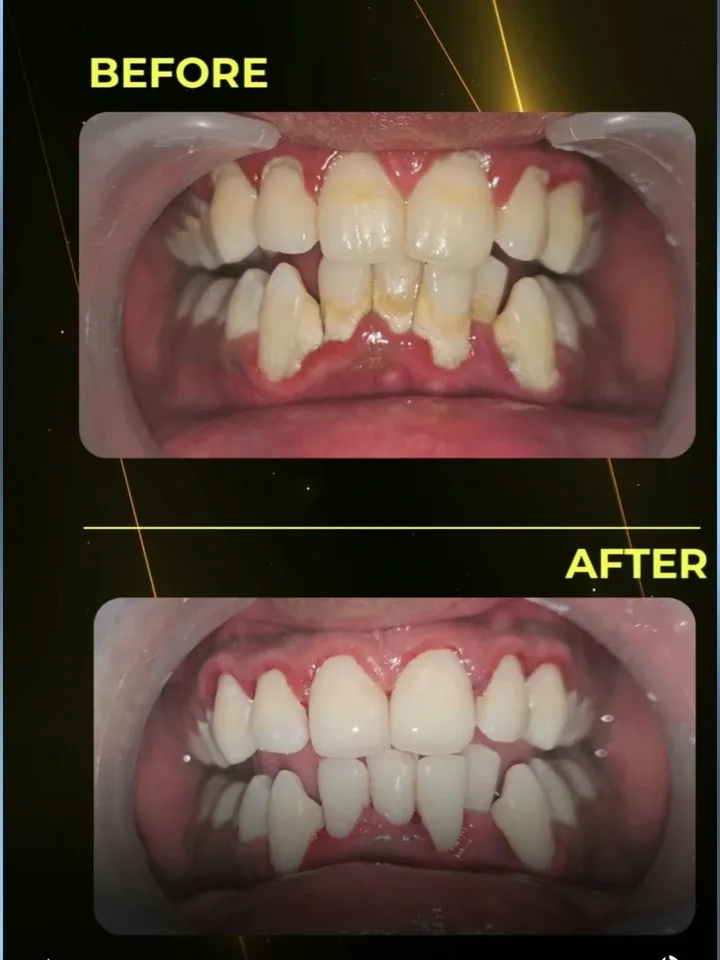
A real patient of ours. Before: tartar built up along the gum line with red, swollen gums. After: the tartar is gone and the gums can start to heal.
For periodontitis: a deeper cleaning under the gum, done in sections under local anaesthesia, called root planing. This is where our consultant periodontist (gum specialist), Dr. Prerna Agale, takes over. She measures the gum pockets around each tooth, treats the affected areas, and sets a review schedule, usually every three to four months instead of six, to keep the disease stopped. Laser treatment is used in some cases to clean pockets with less discomfort.
Keeping gums healthy after treatment
Gum disease does not come back if plaque does not. Brush twice a day with a soft brush, floss daily, and come for a cleaning every six months (or as advised). If you smoke, stopping is the single most effective thing you can do for your gums. If you have diabetes, keeping sugar controlled protects your teeth as much as it protects everything else.
Bleeding gums are the easiest dental problem to fix and the most expensive one to ignore. If yours have been bleeding for more than a couple of weeks, message us and we will book you a cleaning. The clinic is in Green Glen Layout, Bellandur, open daily from 10 AM to 9 PM.